Mexico's circus scene now has a national federation and its own market for programmers
A new federation any circus professional in Mexico can join, and the funding gaps companies still run into.
Circostrada, the European network for contemporary circus and outdoor arts, took a group of its members to Mexico from 24 October to 2 November. Before the trip, it published three free articles in English on the Mexican scene. One is an interview with the team behind NODO CIRCO, a new circus market in Mexico.
Charlotte Pescayre, an ethnologist and circus artist, wrote the contemporary circus article. In Mexico, she writes, contemporary circus shares the field with traditional circus, social circus and Maroma, an Indigenous acrobatic practice. Since 28 January, Mexican circus has its own national federation, the Federación Mexicana de Circo (FEMEC).
Concretely, if you work in circus in Mexico, you can join through femec.org. Membership costs 300 pesos a year, a little more than a 250-peso festival pass, which Circostrada puts at about 12 €. It gets you into FEMEC's assemblies and working groups.
So why don't Mexican companies tour more? Julia Sánchez Aja, a NODO CIRCO founder, names language, visas, the cost of international travel, little money for touring, and markets that sit mostly in the Global North.
NODO CIRCO is her team's answer: a place where companies show work to programmers from abroad, closer to home and cheaper. Its first edition ran this October in Zapopan, in the state of Jalisco, and in Mexico City.
The 2026 call was for Mexican contemporary circus companies with a finished, tour-ready show of at least 30 minutes. Applying was free. An international panel chose who pitched a project to programmers and who played a live showcase of 20 to 30 minutes.
Selected companies covered their own travel, and NODO CIRCO paid no artist fees. The call ran from 30 April to 10 July. NODO CIRCO hasn't announced a 2027 call yet.
Money is the harder part. At federal level, Pescayre writes, circus can apply to Creadores Escénicos for individual projects and México en Escena for companies.
But two other programmes, the Sistema Nacional de Creadores and Coinversiones y Fomento, have no circus category. Most states' creation grants, called PECDA, have none either, with Jalisco and Puebla among the exceptions.
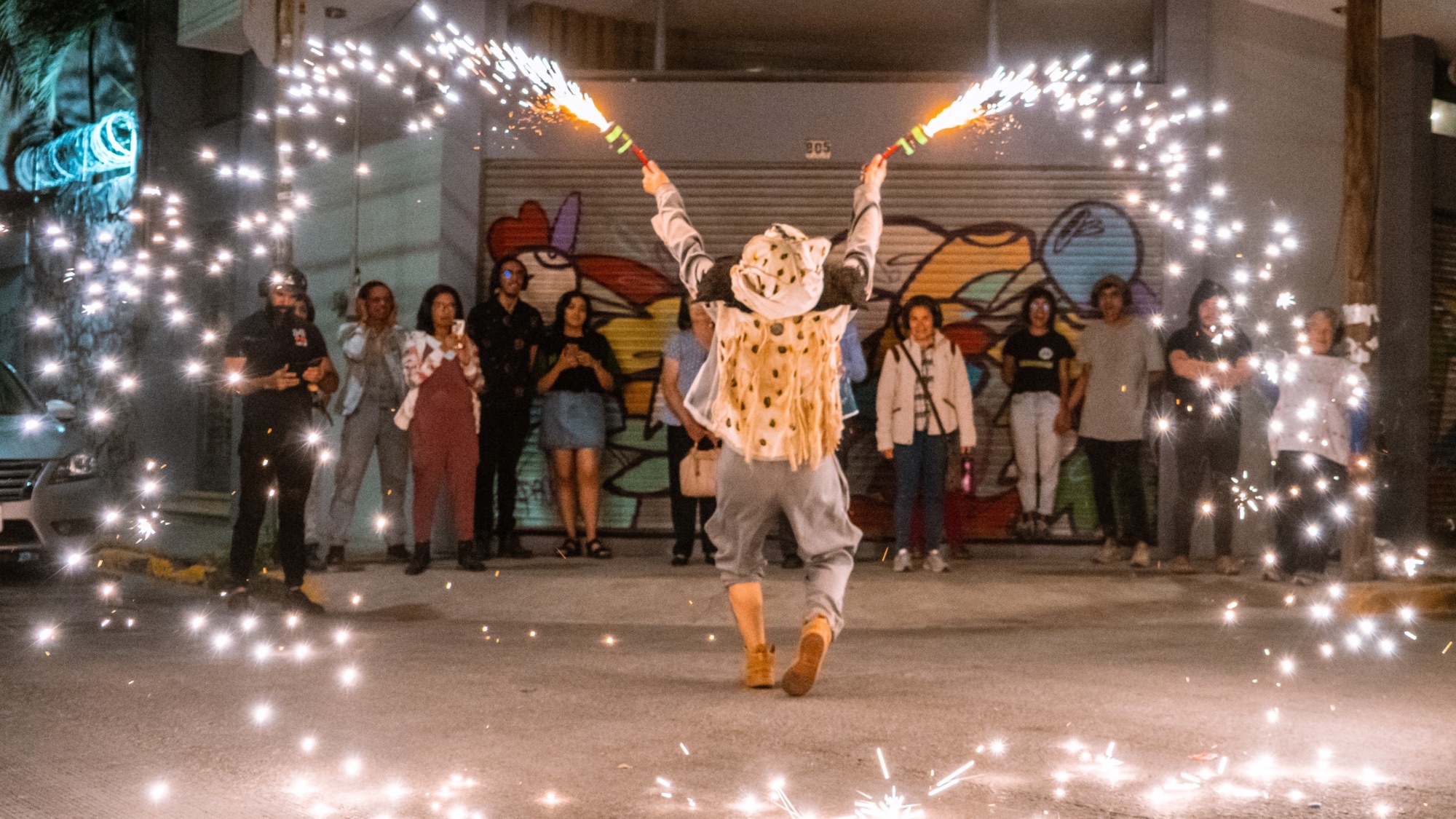
Rubén Ortiz, an artist and researcher, wrote the outdoor arts article, mostly about theatre, puppetry and dance. For him, two decades of the so-called "war on drugs" have made the street a place of risk.